Posts built around cooking a dish.
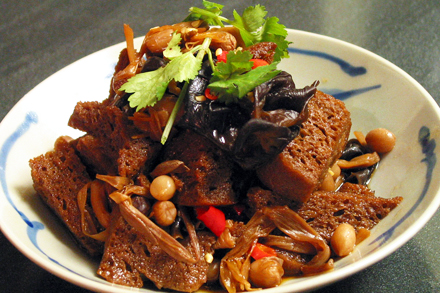
 I was living in Shanghai two years ago when two of my friends from New York came to visit. It was their first visit to China and everything was novel. On the evening of their arrival I took them to the rooftop terrace at a café called New Heights. We had a few drinks and watched the “light show” on the buildings across the river in Pudong. We then headed to dinner at Jade Garden, a Shanghainese restaurant, where I ordered braised bran dough (烤麩). You see my friends are rather well informed when it comes to dining, and rightly so because they frequently venture into New York’s many ethnic restaurants and travel extensively overseas. But they had never heard of bran dough and found it a rather curious dish. It contained tiny pieces of sponge-like dough braised in soy sauce and other ingredients. They weren’t quite sure what to expect initially, but I was confident it would be love at first bite. I was not wrong.
 All my friends thought I was out of my mind when I told them I was going to make homemade mooncakes. Well you see mooncake is one of those things better left for a professional bakery to make. Making them is time consuming and can be very tricky to handle. But the idea of making them at home intrigued me, and I was determined to make an attempt for the Mid-Autumn Moon Festival this year. In fact I wanted to experiment with more modern and innovative flavors. So, I got on Amazon and ordered two mooncake molds
 and made my very first homemade mooncakes: Earl Grey Tea Mooncakes with Egg Yolk and Pine Nuts.
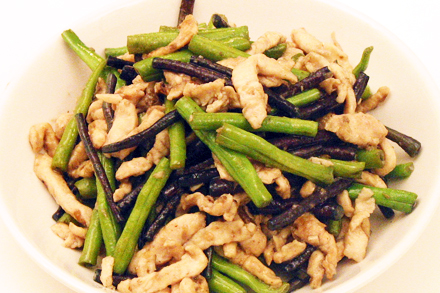
 A few days ago I received a bagful of freshly picked long beans (豇豆) from a friend’s rooftop garden. They were bi-color, crisp and just absolutely gorgeous. Legumes are at their peak during late summer, and I was once again reminded of how we’ve lost the custom of eating locally grown food in season.
 Guess what I found when I was in New York’s Chinatown last week. This beautiful looking hulu! I’ve not seen them before in New York nor anywhere in the U.S. Hulu (葫蘆) is a bottle shaped gourd often seen in Chinese brush paintings. Sages or monks carrying hulu flask are common themes in Chinese art. But these sinuous shaped gourds are also delicious as vegetables.
When was the last time you ordered a salad or cold dish in a Chinese restaurant? In fact I bet you never have. You probably don’t even associate cold dishes…
 Do you remember in March I let the garlic in my kitchen sprout? Yes, it’s been almost three months and no news about the shoots. I am guilty of being neglectful with you, my readers. The fact is I’ve harvested the garlic shoots (蒜苗) twice but I was not motivated enough to record the events. This weekend however I collected another batch of these flavorful young shoots and made the classic twice cooked pork (回鍋肉). This time I am determined to share the marvelous herb and dish with you.
 Located virtually on the equator, Singapore offers a wide variety of fresh fruits year round. Although many tropical fruits are harvested year round, a small number of them are seasonal. When I lived in Singapore I used to follow these seasonal fruits like people in temperate climates follow changing season. Among the seasonal fruits, mango is the one I always eagerly anticipated. Its season starts at the end of the dry months, which is around July. Local mangoes start appearing in the market around August and continue to be available through October.
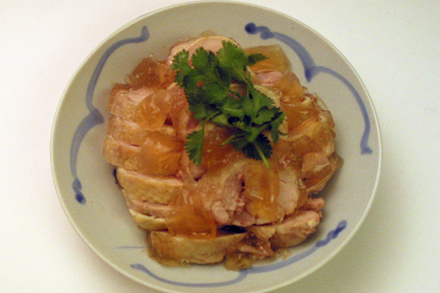
 Memorial Day is over and we’re now officially in the summer season again. Whites are back. So are barbeques, picnics, ice-cold beers and leisurely simple meals. It’s time to dig out our recipes for cold summer dishes. But what can you do to jazz up the boring standard fares in your recipe collection? Why not add some Chinese cold dishes to your repertoire? Drunken chicken (紹興醉雞), for one, can give your summer meals some extra pizzazz.
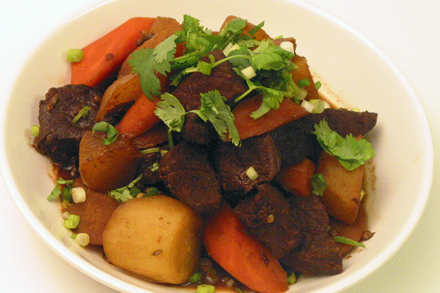 Yes, you can make red cooked beef. But the recipe is slightly modified from red cooked pork so as to add extra spices for reducing the gaminess of beef. Well, the Chinese do consider beef gamey. In fact they think “foreign savages” who eat beef and consume dairy products smell like stale butter. Yet many areas in China have large repertoire of beef dishes, especially in the Northern and Western regions. Go figure!





 by Jennifer 8. Lee. She wrote that Americans don't want their food to look like real animals. Here lies the root of the culinary culture difference.