

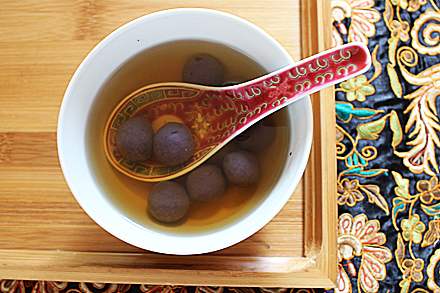
Awakening the Spring with Little Mochi Balls
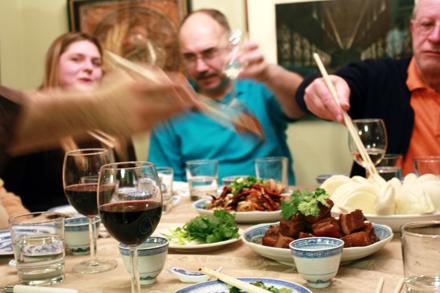
A week ago Friday the night after yuanxiao (元宵), which is on the fifteenth day or the last day of the formal Chinese lunar New Year celebration, I’d invited a few of my blogger friends over for dinner. For months, if not years, I’d been promising them I would cook one of my Chinese feasts, but had not fulfilled this pledge. This last eighteen months I’ve been so pre-occupied with writing my cookbook
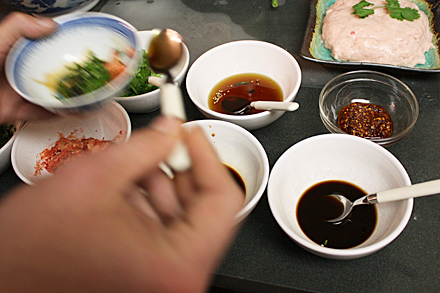
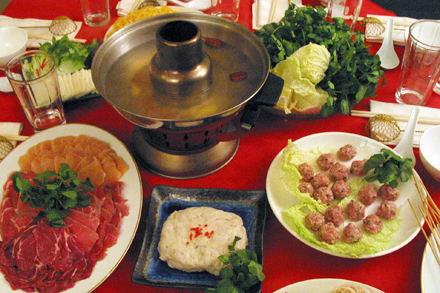
 “What? No red cooked pork?” was the astonished question from my nieces when I told them our Chinese New Year celebration this year was to be a hot pot feast. For years I’ve always made a banquet of traditional Chinese food for the obligatory New Year’s Eve reunion dinner. But this year I decided to break from our family tradition. New Year hot pot dinners have always been very common in the provincial districts of China. But many city folks are rediscovering this tradition because not only is it delicious, it is also more economical and less time consuming to prepare.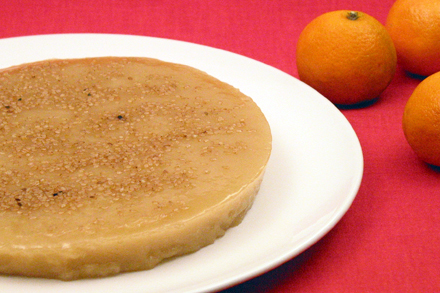
 In America homophones are language oddities that spark interest only as intellectual curiosities. But in Chinese culture they play a very large role in everyday and holiday symbols. Perhaps this is because there are so many homophones in the Chinese language. So it is that many food traditions during Chinese New Year are connected to play on homophones. One such food symbol is the Chinese New Year cake known as “nian gao” (年糕) in Mandarin.