


Bi-Coastal Chinese Food and Wine Pairing
 It all started with a cheery comment on my very first Chinese food and wine pairing post back in July. Kirstin, who lives in California and writes the blog Vin de la Table, wrote that she would be interested in attempting a long distance wine pairing joint-post with me. I was fascinated by her suggestion. Pairing European style wine with Chinese food, or Asian food for that matter, has always been a contentious subject among Asian food connoisseurs. Many feel that Chinese food is best paired with traditional Chinese rice wine or liquor, but many others have successfully paired grape wine. So it is with this expectation that Kirstin and I embarked on an adventure to pair wine with a few of my recipes. As part of our joint effort Kirstin created a Chinese food and wine pairing guide to accompany our posts. I hope you’ll find her guide and our posts useful.


 In our household Thanksgiving dinner is a sacred tradition. My partner Warren insists that we only serve his mother’s New England Thanksgiving dinner. For years I’ve not strayed from her traditional menu, which includes roast turkey with oyster stuffing, orange cranberry sauce, homemade pickles, creamed peas and onions, mashed Butternut squash and turnip, and mashed potato. For dessert we routinely serve apple and pumpkin pie. At the end of the meal there’s usually rarely any apple pie left but plenty of pumpkin pie. And there’s always uncooked pumpkin left from making the pie. This year I decided to use it to make a very traditional Chinese stir-fry.

 Recently I conducted an email interview with Mitchell Davis, who is the vice president of the James Beard Foundation. The foundation in staging a three day fund raising event in New York including a Gala Dinner and Auction on November 13th, and a two-day culinary conference on November 14th and 15th. Known as

 October, which is the National Seafood Month, has been re-christened to National Sustainable Seafood Month by organizations concerned with the well being of our oceans and food supply. Our oceans are facing great dangers from over fishing and unfettered pollution. Last month Jacqueline Church, who blogs at The Leather District Gourmet from Boston, called for food bloggers to participate in a virtual blog event to highlight awareness of these dangers. She created the “

 To someone growing up in Asia in the 1960’s “boiled peanuts and a movie” is what “popcorn and a movie” is to the American moviegoers. As a child going to the cinemas in Singapore, I would always encounter boiled peanuts peddlers pushing large steaming kettles, mounted on tricycles, bursting with peanuts selling their fare. My friends and I would purchase packages of boiled peanuts in newspaper cones and bring them into the theatre. We would crack the peanuts noiselessly, as the moist soft shells split easily, and discard them on the floor. At the end of the show the floor would be full of peanut shells and I used to enjoy stomping on the shells making crunching noise as we walked out. But this reminiscing also brought out my feeling of disgust for how filthy that habit was. I’m glad that this practice doesn’t exist anymore.

 If you’ve been a reader of food blogs during the last year it is very likely you’ve encountered the Foodbuzz banners. They’re hard to avoid. More than one thousand food bloggers are already Featured Publishers of Foodbuzz. And the main
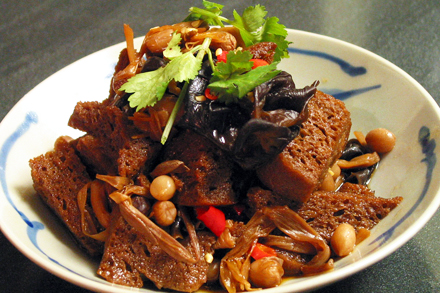
 I was living in Shanghai two years ago when two of my friends from New York came to visit. It was their first visit to China and everything was novel. On the evening of their arrival I took them to the rooftop terrace at a café called
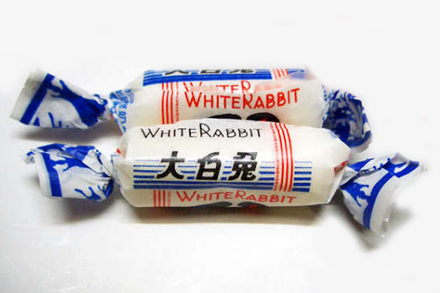
 I routinely read Asian news reports on several Chinese language Web sites, and this Friday morning was no different. But on that morning as I read the alarming and ever expanding number of news reports on tainted Chinese dairy products, I started feeling a growing unease at my regular consumption of Chinese food products. After an announcement on September 21st by the Agri-Food and Veterinary Authority of Singapore that melamine was detected in the White Rabbit Creamy Candy from China, the candy was pulled off the shelves in many Asian markets. The Manufacturer finally announced a recall in China on Friday. As it happens White Rabbit Creamy Candy is one of my favorite candies. I’ve enjoyed them since my youth in Singapore and continue to purchase them here in New York’s Chinatown. After discarding my White Rabbit candies at home I wonder how I can keep my food supply safe.