

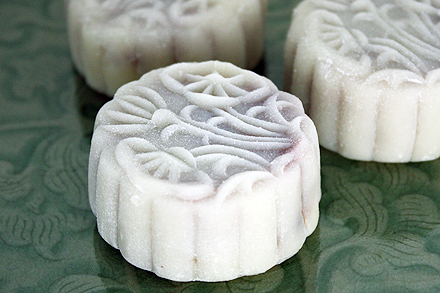
Commercialization of the Moon Festival
 I walked into the K-Mart store near Penn Station in New York last week and discovered to my horror that the Christmas section is already fully stocked with artificial Christmas trees, holiday decorations and ribbons. I had to check the date on my New York Times to make sure I had not completely missed Columbus Day, Halloween and Thanksgiving. This senseless commercialization sent shivers up my spine.
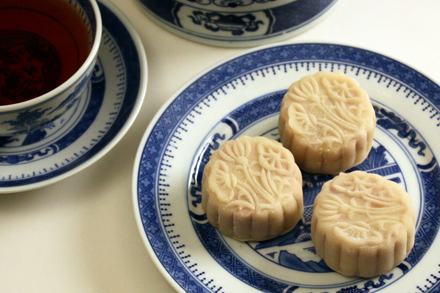
Just like Christmas in America and the West, Asian merchants have learned the art of commercializing holidays. I was rather surprised, though not completely unexpectedly, to find mooncakes being marketed all over Asia as I traveled in August even though Mid-Autumn Moon Festival (中秋節) is not until October 3rd. From Kuala Lumpur to Hong Kong and Singapore to Shanghai, neighborhood bakeries as well as multi-national food chains were touting their specialty mooncakes in advertisements as well as by shelf talkers in their stores.
I walked into the K-Mart store near Penn Station in New York last week and discovered to my horror that the Christmas section is already fully stocked with artificial Christmas trees, holiday decorations and ribbons. I had to check the date on my New York Times to make sure I had not completely missed Columbus Day, Halloween and Thanksgiving. This senseless commercialization sent shivers up my spine.
Just like Christmas in America and the West, Asian merchants have learned the art of commercializing holidays. I was rather surprised, though not completely unexpectedly, to find mooncakes being marketed all over Asia as I traveled in August even though Mid-Autumn Moon Festival (中秋節) is not until October 3rd. From Kuala Lumpur to Hong Kong and Singapore to Shanghai, neighborhood bakeries as well as multi-national food chains were touting their specialty mooncakes in advertisements as well as by shelf talkers in their stores.
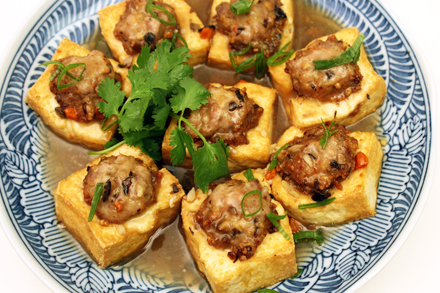
 Our good friend CK took us to the Chinatown section of Kuala Lumpur during our tour of Malaysia in August. Walking through a little alleyway we entered a small bustling wet market. These markets, still commonplace in Asia, are collections of vendors hawking multitudes of produce, seafood, poultry, meat and dry goods. Beyond the market there was an area full of hawker stalls selling prepared food. Weary shoppers could enjoy a snack or a hearty meal there. In among the stalls was CK’s favorite vendor selling yong tau foo. He still remembers skipping class to sneak a snack there. Passionate fans of yong tau foo lavish devotion on their favorite vendors for good reasons. Many vendors have been in the business for generations and have developed their very own special recipes. But if these recipes have been handed down through generations, why then is the yong tau foo we know of in Malaysia and Singapore so different from the traditional Hakka yong tau foo served in China or Hong Kong?
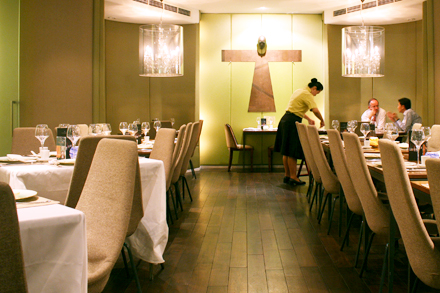
 In the heart of the Chinatown area of Singapore was an old faded hotel and restaurant known as the Majestic. I remember the building being one of those relics from the 1930's unkempt but with lots of potential. Our family used to go to the restaurant for good inexpensive Chinese food but certainly not a gourmet experience by any measure. In 2006 the hotel underwent a complete transformation into an incredibly stylish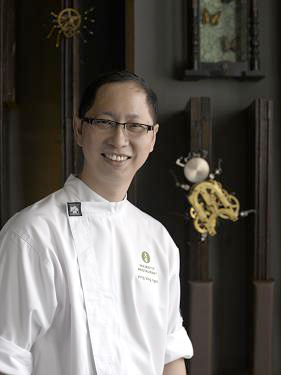
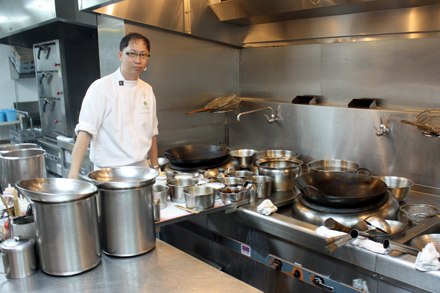 Unhappy and failing in high school Yong Bing Ngen (楊彬源) decided he was ready to set out and explore his future on his own. He announced his intention to his schoolmates one day and left school the next to work at his brother-in-law’s restaurant as a dishwasher. Without a definite plan his mother was concerned for his prospects, and advised him to learn a trade. He pondered her counsel while doing dishes and took a peek at the cooks in the kitchen. It was a “
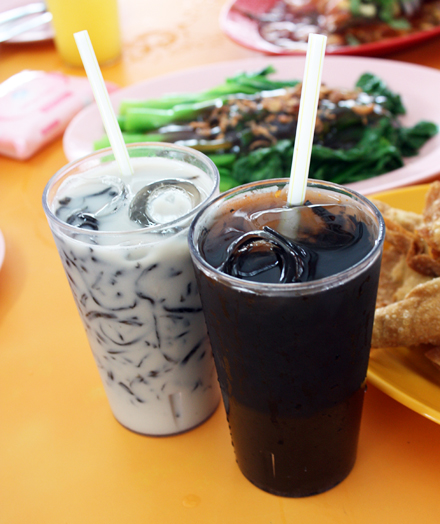 We left our comfortable air-conditioned car and entered a large corrugated shed that houses the Orchard View Yong Tau Foo Restaurant in Kuala Lumpur on a recent hot sunny afternoon. Although the shed is open-sided it sits between two similar restaurants so there is no cross breeze to speak of. By the time we were seated I was already drenched with sweat. I couldn’t wait to order one of the ice cold drinks that always start a meal in restaurants throughout Malaysia and Singapore.
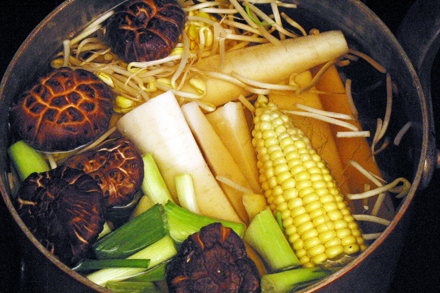
 As an open-minded omnivore, I enjoy vegetarian dishes as much as meat dishes. On many occasions I’ve successfully made vegetarian dishes for my vegetarian friends. Many were surprised at the diversity of Chinese vegetarian dishes and commented how flavorful and hearty they were. The key to a rich tasty vegetarian dish is to make use of what is known as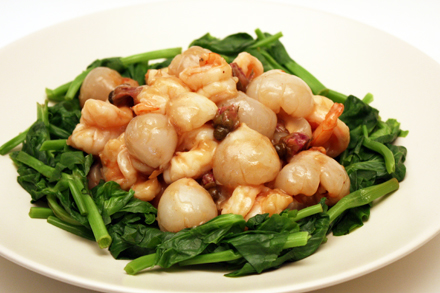
 Summer in Shanghai heralds the arrival of bountiful local fruits like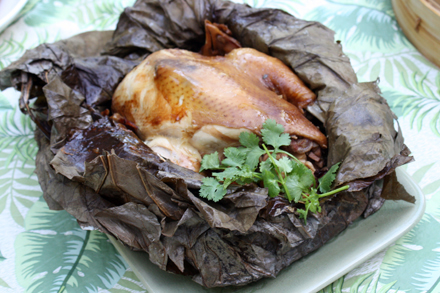
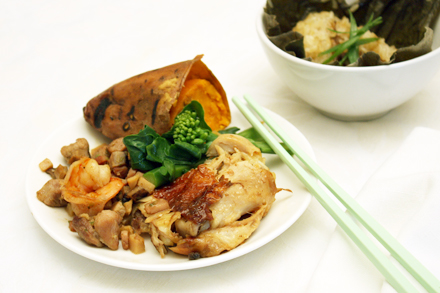 A starving beggar in China during the Qing dynasty is said to have stolen a chicken and was hotly pursued by its owner. In his haste he buried the chicken in mud near a riverbank to hide it. Later that night he returned and retrieved the chicken, its feathers covered in mud. He started a fire of twigs and branches to cook the chicken. But not having any utensils he placed the entire chicken directly into the fire. A tight clay crust formed as the fowl cooked, and when the crust was cracked open the feathers came right off the chicken exposing juicy tender meat and emitting an incredible aroma. The roasted chicken was so delicious he decided to start selling his creation to the villagers. Unbeknownst to him he had just invented one of the greatest culinary traditions of China.
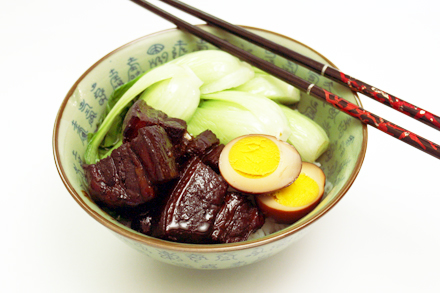
 Chinese takeout lunches as a rule are fast, convenient, filling and economical. We in America know them as a Styrofoam container loaded with heaps of white rice, and topped with a gooey sticky stir-fry. Sometimes accompanied by a grease soaked fried spring roll. Although the quality of these lunches is not always consistent they are mostly tasty and satisfying. I’m not ashamed to say that I occasionally enjoy them as well. But are there homemade alternatives that can be more fulfilling than these quintessential takeout lunches? One answer is red cooked pork over rice.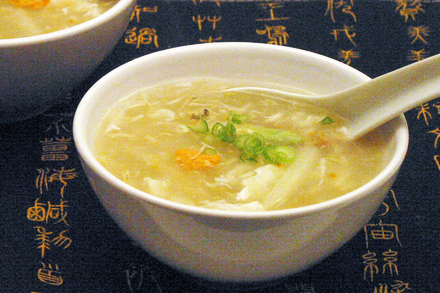
 Hunting for white asparagus at the start of the summer is not exactly orthodox. But that is what I found myself doing a few days ago. It’s not that I haven’t had any asparagus this spring. There was an abundance of green asparagus in the farmer’s markets and Pathmark across the street from where we live. Over the last few months I’ve had them steamed with butter, grilled with olive oil, dressed with Hollandaise sauce and mixed in fried rice. But a few days ago I spotted some fresh and peppy looking mud crabs in Chinatown, which instantly suggested “white asparagus and crabmeat soup” like those found in many traditional Chinese restaurants in Asia. This notion suddenly became an obsession and I immediately bought some of the crabs and went on a quest for white asparagus.