Essays on Chinese food history, culture and ideas.
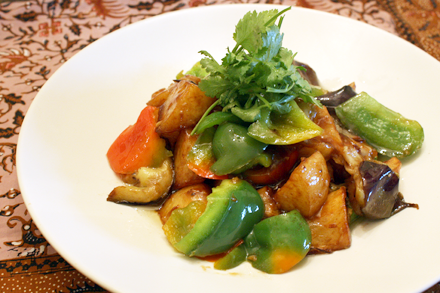
It may surprise many people to learn that China has been the world’s largest producer of potatoes since 1993. But it should not be entirely unexpected. The Chinese diet has changed drastically since the economic reforms of the 1980’s. Introduction of French fries by Western fast food establishments popularized potatoes. The Chinese government has been enhancing food security by encouraging diversification of staple crops to include high-yield potatoes. And the Chinese are adapting new and exciting ways to cook the mighty spud.
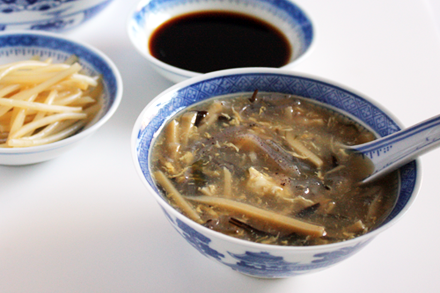
Today (July 1st, 2010) a law prohibiting the possession, sale and distribution of shark fins goes into effect in the state of Hawaii. Hailed as a victory, albeit a small one, by conservationists, this law nevertheless is a major step in recognizing the need for government action to help save the shark. Sought after by the Chinese for millenniums, shark fins were a delicacy reserved for the elite, and served at important celebrations and banquets. With the recent rise of the middle class in China the demand for shark fins has skyrocketed. This Chinese fondness for shark fins is threatening the survival of the sharks. Although laws banning consumption of shark fins is a positive step in limiting shark fins trade we, as consumers, must also consciously make a choice not to eat shark fins if we were to succeed in preventing the shark's extinction.
 I have a New Year resolution, a Chinese New Year resolution that is. I am going to eat healthier from now on. No I’m not going to seek fat-free products on market shelves, nor am I going to reduce the fat in my cooking. I plan to use natural animal and vegetable fats in my cooking. Yes, that’s right I am not going to shy away from either natural animal fats such as lard, tallow and organic butter, or natural vegetable fats such as coconut oil, olive oil and grapeseed oil. As it turned out these fats are not necessarily harmful to your health; in fact they are often essential for your body. Besides they are delicious!
 At first I noticed a few blocks of broken links on some Web pages. Then I started receiving “connection timeout” and “server reset” messages. Access to my favorite places like Facebook, Twitter and YouTube was unsuccessful. Furthermore many food blogs I regularly visit were inaccessible as well. These were not symptoms of a widespread network failure, but rather the result of surfing the Internet from Shanghai. Such was the extent of the “great firewall” of China I encountered during my travel there last fall.
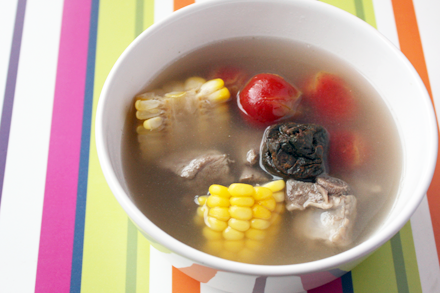 One of my favorite activities when traveling is to visit local food markets. Last week, while wandering through the produce section of a wet market in Shanghai, I found something I’d never seen before. A large unmarked basket was full of miniature bright red fruits freckled with light brown dots that resembled crabapples. They had long green stems attached, and visible sepal crowns at the bottom. According to the friendly wrinkled-faced vendor I had stumbled upon haw fruit.
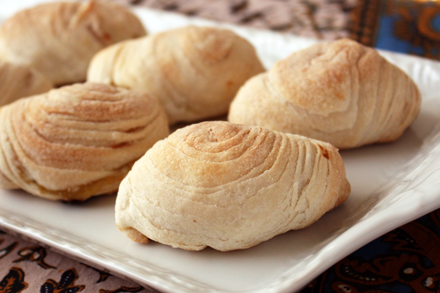 If there’s one thing that everyone can agree on about durian it’s the odor. Not only is the odor strong and distinct, it permeates through layers of packaging and lingers interminably. Airlines and public transport authorities in Asia ban durian in the aircrafts, subway trains and buses. Hotels in the region similarly prohibit it in their rooms.
To foreigners not familiar with this fruit the odor is so foul that few would attempt to eat it. Durian is the only fruit that the host of Bizarre Foods on the Travel Channel, Andrew Zimmern, simply couldn’t swallow. But to many other people the aroma, which becomes more pronounced as the fruit ripens, is the allure of the fruit. Therein lies the conundrum of durian: the stronger the odor the more desirable the fruit.
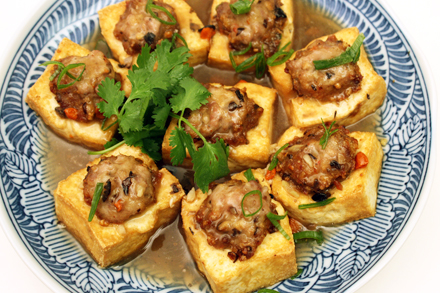 Our good friend CK took us to the Chinatown section of Kuala Lumpur during our tour of Malaysia in August. Walking through a little alleyway we entered a small bustling wet market. These markets, still commonplace in Asia, are collections of vendors hawking multitudes of produce, seafood, poultry, meat and dry goods. Beyond the market there was an area full of hawker stalls selling prepared food. Weary shoppers could enjoy a snack or a hearty meal there. In among the stalls was CK’s favorite vendor selling yong tau foo. He still remembers skipping class to sneak a snack there. Passionate fans of yong tau foo lavish devotion on their favorite vendors for good reasons. Many vendors have been in the business for generations and have developed their very own special recipes. But if these recipes have been handed down through generations, why then is the yong tau foo we know of in Malaysia and Singapore so different from the traditional Hakka yong tau foo served in China or Hong Kong?
 Red wine and Chinese food are often thought to be incompatible. Many feel that full-bodied red wines either compete aggressively with spicy Chinese dishes or simply overwhelm them. If my dinners are any indication, this is very much the case. So when I planned the long distance wine pairing with Kirstin of Vin de la Table I decided to see if I could finally find a red wine to match spicy Chinese food.
 It all started with a cheery comment on my very first Chinese food and wine pairing post back in July. Kirstin, who lives in California and writes the blog Vin de la Table, wrote that she would be interested in attempting a long distance wine pairing joint-post with me. I was fascinated by her suggestion. Pairing European style wine with Chinese food, or Asian food for that matter, has always been a contentious subject among Asian food connoisseurs. Many feel that Chinese food is best paired with traditional Chinese rice wine or liquor, but many others have successfully paired grape wine. So it is with this expectation that Kirstin and I embarked on an adventure to pair wine with a few of my recipes. As part of our joint effort Kirstin created a Chinese food and wine pairing guide to accompany our posts. I hope you’ll find her guide and our posts useful.
 In her book The Fortune Cookie Chronicles, Jennifer 8. Lee states that there are more Chinese restaurants in America than there are McDonalds, Burger Kings and Wendys combined. So why are there no outstanding Chinese restaurants in America?
Chinese American food is consistent, reliable, familiar and extremely boring. It has served the American public well and most Americans consider it comfort food. But when I yearn for good authentic Chinese food I usually end up at a small family-operated restaurant tucked away in Chinatown where the service is almost non-existent and the level of cleanliness leaves much to be desired.