

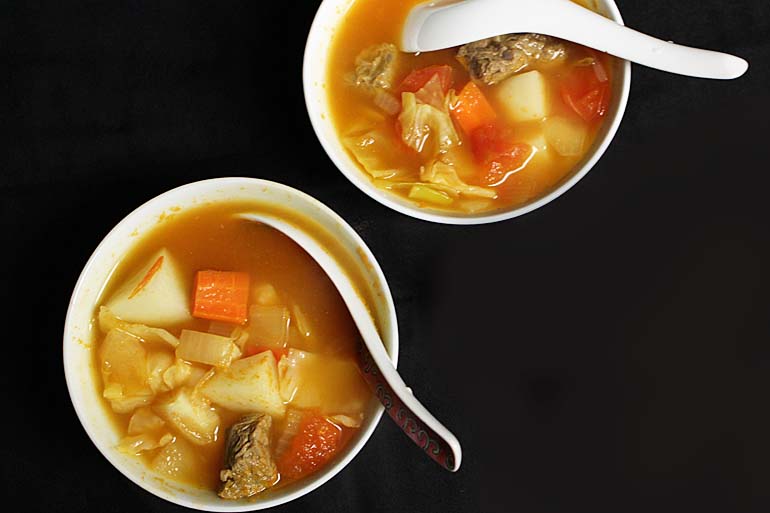
Luosong Soup: Too Chinese to be Borscht?
On the second day of spring New York City was hit by the fourth Nor’easter of the month. March is a fickle month. It often warms up as a portent of spring, yet sometimes the Canadian Arctic air swooshes down and reminds us that mother nature can be ruthless. This year, although Match has not been particularly cold, we’ve had three Nor’easters in a row with heavy wet snow and strong winds wreaking havoc in much of the city’s surrounding area. So, this latest storm is testing everyone’s endurance. Stuck at home, I decided to revisit my research for the foodways of Russian émigrés in China during the late 19th and early 20th century. A rather apt pursuit considering the wintery weather outside.
 One of my favorite activities when traveling is to visit local food markets. Last week, while wandering through the produce section of a wet market in Shanghai, I found something I’d never seen before. A large unmarked basket was full of miniature bright red fruits freckled with light brown dots that resembled crabapples. They had long green stems attached, and visible sepal crowns at the bottom. According to the friendly wrinkled-faced vendor I had stumbled upon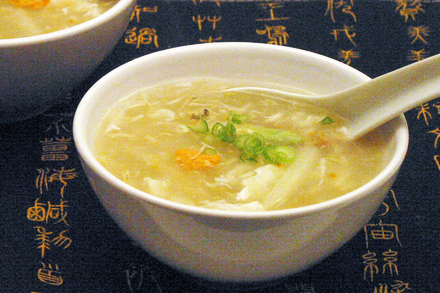
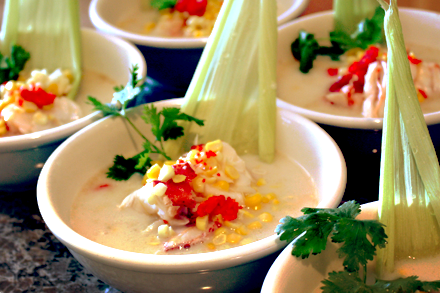
 Hunting for white asparagus at the start of the summer is not exactly orthodox. But that is what I found myself doing a few days ago. It’s not that I haven’t had any asparagus this spring. There was an abundance of green asparagus in the farmer’s markets and Pathmark across the street from where we live. Over the last few months I’ve had them steamed with butter, grilled with olive oil, dressed with Hollandaise sauce and mixed in fried rice. But a few days ago I spotted some fresh and peppy looking mud crabs in Chinatown, which instantly suggested “white asparagus and crabmeat soup” like those found in many traditional Chinese restaurants in Asia. This notion suddenly became an obsession and I immediately bought some of the crabs and went on a quest for white asparagus.