

Durian… “Like Eating Sweet Raspberry Blancmange in the Lavatory”
 If there’s one thing that everyone can agree on about durian it’s the odor. Not only is the odor strong and distinct, it permeates through layers of packaging and lingers interminably. Airlines and public transport authorities in Asia ban durian in the aircrafts, subway trains and buses. Hotels in the region similarly prohibit it in their rooms.
To foreigners not familiar with this fruit the odor is so foul that few would attempt to eat it. Durian is the only fruit that the host of Bizarre Foods on the Travel Channel, Andrew Zimmern, simply couldn’t swallow. But to many other people the aroma, which becomes more pronounced as the fruit ripens, is the allure of the fruit. Therein lies the conundrum of durian: the stronger the odor the more desirable the fruit.
If there’s one thing that everyone can agree on about durian it’s the odor. Not only is the odor strong and distinct, it permeates through layers of packaging and lingers interminably. Airlines and public transport authorities in Asia ban durian in the aircrafts, subway trains and buses. Hotels in the region similarly prohibit it in their rooms.
To foreigners not familiar with this fruit the odor is so foul that few would attempt to eat it. Durian is the only fruit that the host of Bizarre Foods on the Travel Channel, Andrew Zimmern, simply couldn’t swallow. But to many other people the aroma, which becomes more pronounced as the fruit ripens, is the allure of the fruit. Therein lies the conundrum of durian: the stronger the odor the more desirable the fruit.
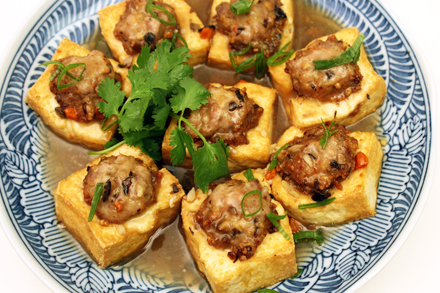
 Our good friend CK took us to the Chinatown section of Kuala Lumpur during our tour of Malaysia in August. Walking through a little alleyway we entered a small bustling wet market. These markets, still commonplace in Asia, are collections of vendors hawking multitudes of produce, seafood, poultry, meat and dry goods. Beyond the market there was an area full of hawker stalls selling prepared food. Weary shoppers could enjoy a snack or a hearty meal there. In among the stalls was CK’s favorite vendor selling yong tau foo. He still remembers skipping class to sneak a snack there. Passionate fans of yong tau foo lavish devotion on their favorite vendors for good reasons. Many vendors have been in the business for generations and have developed their very own special recipes. But if these recipes have been handed down through generations, why then is the yong tau foo we know of in Malaysia and Singapore so different from the traditional Hakka yong tau foo served in China or Hong Kong?
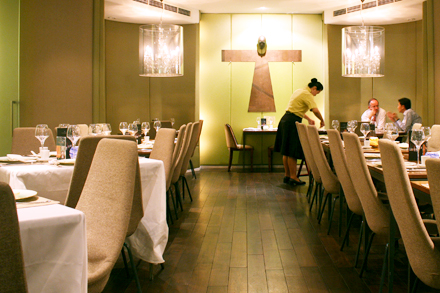
 In the heart of the Chinatown area of Singapore was an old faded hotel and restaurant known as the Majestic. I remember the building being one of those relics from the 1930's unkempt but with lots of potential. Our family used to go to the restaurant for good inexpensive Chinese food but certainly not a gourmet experience by any measure. In 2006 the hotel underwent a complete transformation into an incredibly stylish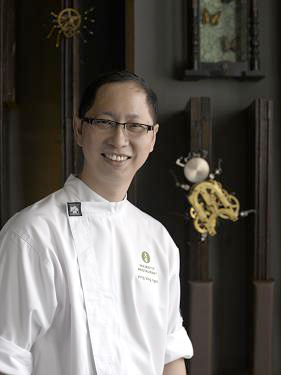
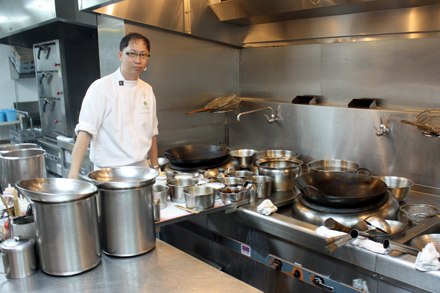 Unhappy and failing in high school Yong Bing Ngen (楊彬源) decided he was ready to set out and explore his future on his own. He announced his intention to his schoolmates one day and left school the next to work at his brother-in-law’s restaurant as a dishwasher. Without a definite plan his mother was concerned for his prospects, and advised him to learn a trade. He pondered her counsel while doing dishes and took a peek at the cooks in the kitchen. It was a “