Food travel and restaurant visits.
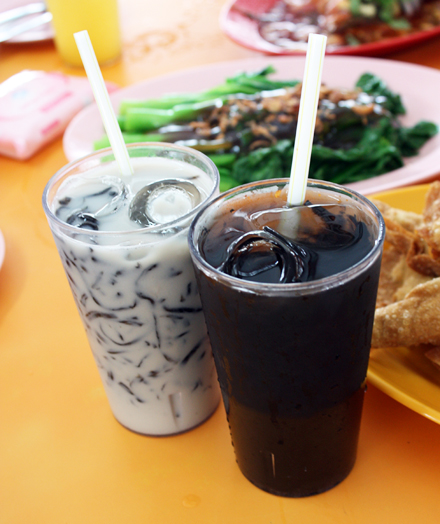 We left our comfortable air-conditioned car and entered a large corrugated shed that houses the Orchard View Yong Tau Foo Restaurant in Kuala Lumpur on a recent hot sunny afternoon. Although the shed is open-sided it sits between two similar restaurants so there is no cross breeze to speak of. By the time we were seated I was already drenched with sweat. I couldn’t wait to order one of the ice cold drinks that always start a meal in restaurants throughout Malaysia and Singapore.
 In this second post of a series I am looking at trends in modern Chinese cooking that will be showcased at the James Beard Foundation’s Gala Dinner entitled Dumplings and Dynasties.
The menu for the Gala dinner is an extraordinary presentation of modern movements of Chinese cuisine globally. In my email interview with the vice president of the James Beard Foundation, Mitchell Davis, he says, “When we are dealing with immigrant cuisines, we often forget that food evolves after immigrants leave. Our increasingly global world means that chefs from all over are exposed to trends in ingredients and techniques from just about everywhere… Rather than try to recreate an old tradition, we thought it would be more interesting to see where Chinese cuisine is today. I think the chefs and the menu will do just that.”
 So it was on this July 4th weekend my partner, Warren, and I along with some of our neighbors went to the beach. Our wonderful friend Chick invited all of us to spend the weekend with him and his family at their beach house, which is in a small coastal hamlet of Slaughter Beach at the mouth of the Delaware River. Kim, the Yummy Mummy, and her family were part of the group. If you’ve been following her blog you’d know about the “horrors” that happened during the weekend. But don’t believe all of them!
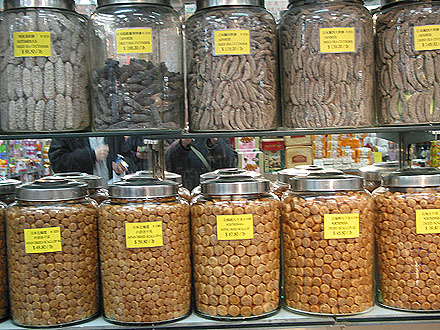
 I grew up in a rather suburban residential neighborhood of Singapore in the 1960’s. Our home sat on a hill up from a main thoroughfare. The vicinity is devoid of any commercial establishments but for a little dry goods store three quarters way down the hill. I often frequent the store for two reasons. One was to buy local and foreign candies, which they stocked in neat rows of glass canisters. Another was to ogle at the myriads of dry food products, many of which I could not even identify. I remembered the front of the store lined with sacks of grains and beans. There were white rice, glutinous rice, brown rice, soybeans, mung beans, red beans and others. There were also rows of glass canisters filled with dried mushroom, cuttlefish, squid, scallop, and all kinds of seafood. And then there were the individual cellophane packages of dried plums, nuts and Chinese fruit candies strewn all over the counters. We used to buy them by the jin, which is a Chinese weight unit still used in Singapore then. This is my memory of the Seng Hock market.